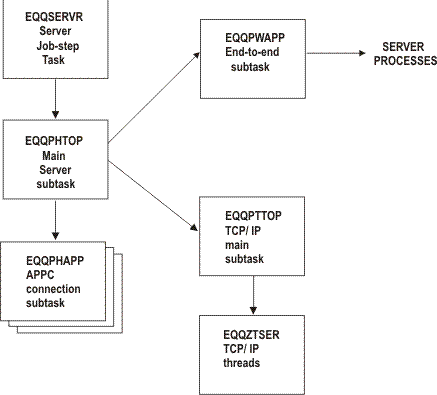
The main server task, EQQPHTOP, is attached by main task EQQSERVR. If you are using
the APPC communication protocol, for each new conversation a new instance of EQQPHAPP subtask is
attached. If you are using the TCP/IP communication protocol, for each new connection a new thread
is started by process EQQZTSER (which depends on task EQQPTTOP). The EQQPWAPP
subtask is attached for end-to-end scheduling with fault tolerance capabilities. It triggers the
server processes for end-to-end scheduling. IBM Z Workload Scheduler server tasks shows the task
structure of the IBM Z Workload Scheduler server
address space.
Figure 1. IBM Z Workload Scheduler server tasks
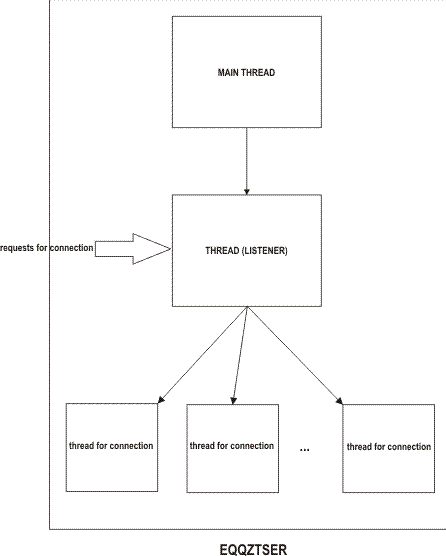
Internals of the EQQZTSER process. provides a graphical summary of how
process EQQZTSER works. The main thread runs a Listener thread, which
starts a new communication thread for each incoming TCP/IP connection
request it receives. A request for connection can come from any of
the available user interfaces: PIF, OCL, BCIT, ISPF dialogs, or Dynamic Workload Console.
Note that:
Any communication thread that stays idle for more than five minutes
is automatically closed the end of this time.
The maximum number of threads that can be open at any moment is
given by your z/OS system configuration.